Key Takeaways
- 8-axis CNC machining centers mill intricate geometric grooves with 0.1mm spindle precision directly into monolithic Dholpur Beige sandstone slabs.
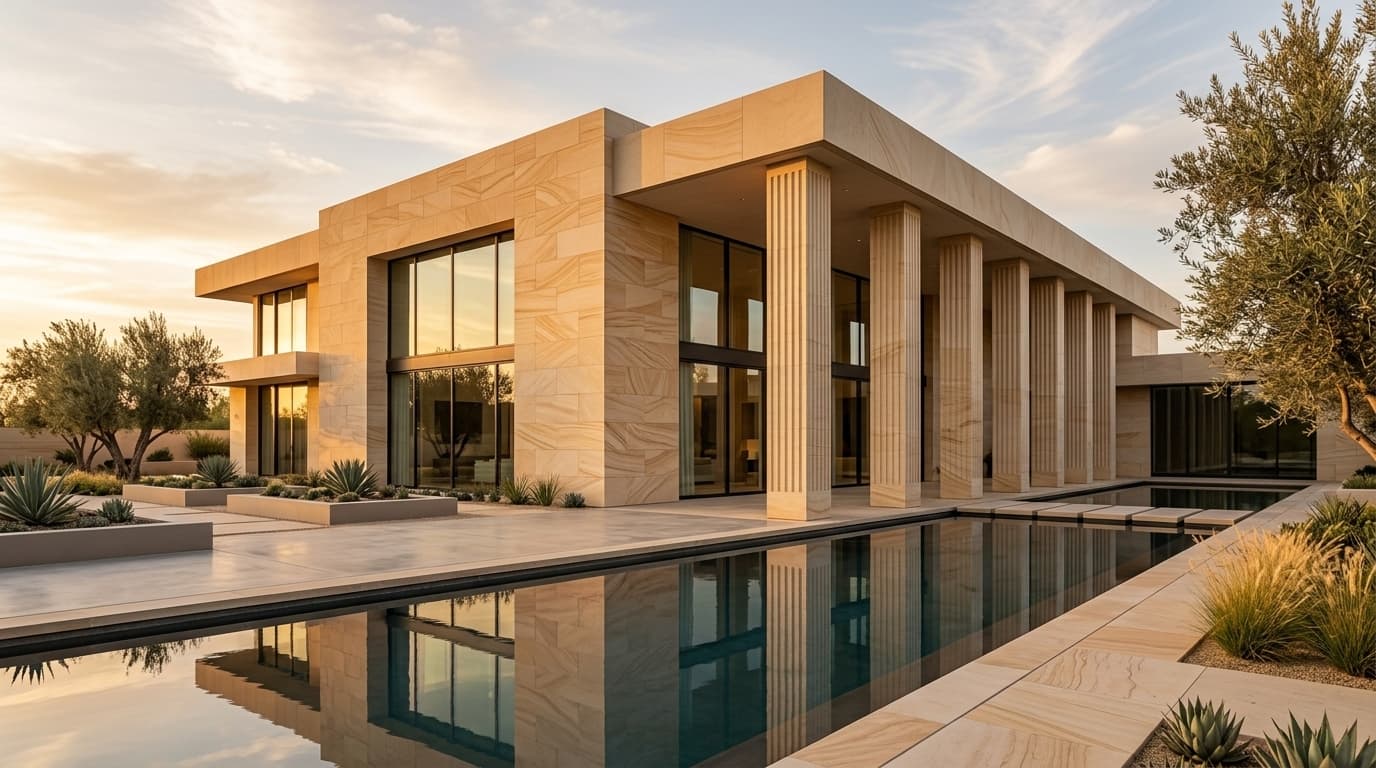
- 3D fluting and wave profiles break up flat facade monotony, creating dynamic chiaroscuro shadow lines that shift with natural sunlight angles throughout the day.
- Unlike synthetic GFRC or precast concrete panels, solid CNC-carved sandstone will never crack from internal alkali-silica reactions or corrode reinforcing rebar.
- Mechanical dry-cladding with rear undercut anchors ensures that large-format 3D panels are securely mounted without visible surface screws or mortar staining.
Contemporary luxury architecture thrives on tactile materiality. Flat, unembellished curtain walls are increasingly giving way to sculptural building envelopes that celebrate light, depth, and shadow. By harnessing cutting-edge 8-axis laser-guided CNC profiling centers at our fabrication facilities, Dholpurstones transforms heavy, raw quarry blocks into precision 3D architectural panels that marry classical stone permanence with futuristic parametric design.
1. The Evolution: From Hand Chiseling to 8-Axis CNC Milling
For centuries, surface texturing on natural stone was limited to artisanal hand-dressing: bush-hammering, point chiseling, and linear grooving. While hand craft imparts romantic warmth, complex mathematical parametric textures across thousands of square meters require microscopic consistency.
Our automated multi-axis CNC profiling centers operate diamond-tipped end mills and ball-nose cutters under continuous water coolant jets. Laser scanning coordinates ensure that panel-to-panel groove continuity is preserved across multi-story facade elevations with tolerances under +/-0.5mm.
Machining Accuracy
High-speed water-cooled diamond router bits spin at 8,000 RPM, allowing micro-fine fluting without imparting vibrational micro-fractures to the natural stone grain.
2. Popular 3D Parametric Profiles: Fluted, Wave & Reeded
Architects can choose from an extensive repertoire of standard and custom CNC textured profiles:
- Continuous Reeded & Fluted: Vertical semicircular concave or convex grooves (15mm to 50mm radius) that elongate building height and cast sharp linear shadows.
- Parametric Kinetic Waves: Sinusoidal waveforms that evoke flowing desert dunes, creating a dynamic sense of fluid movement across static stone walls.
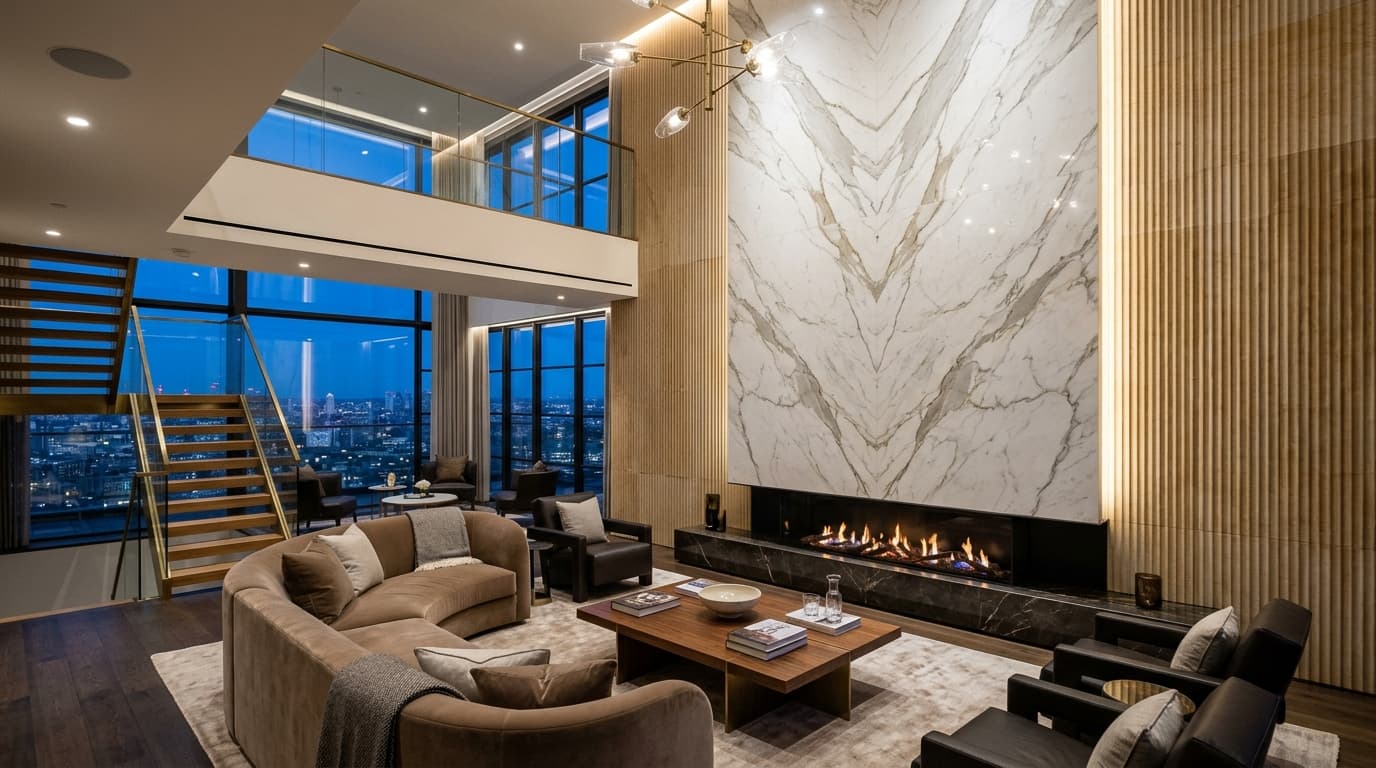
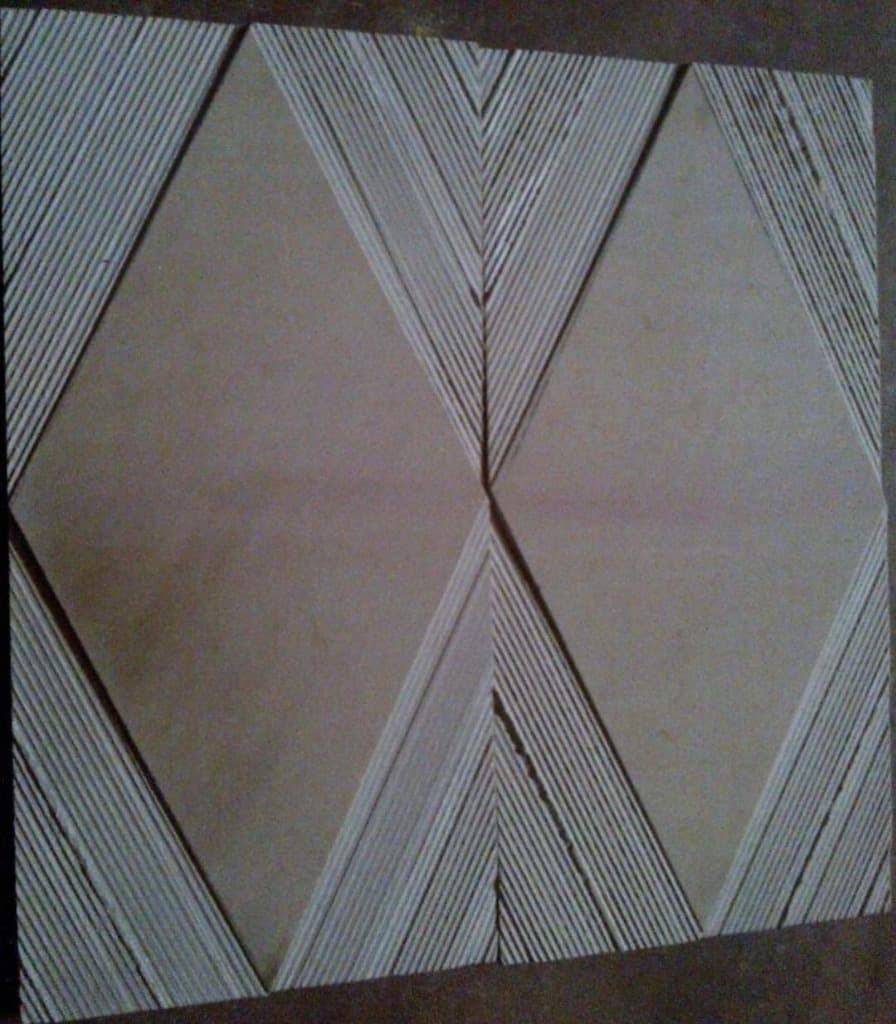
- V-Grooved Chevron & Herringbone: Interlocking diagonal chamfers that add geometric rhythm to entrance portals and double-height lobby atriums.
- Pyramidal & Diamond 3D Facets: Projecting multifaceted pyramidal tiles that refract ambient daylight in crystalline patterns.
3. Solid Sandstone vs. GFRC & Precast Facade Panels
Architects seeking textured facades often consider Glass Fiber Reinforced Concrete (GFRC) or precast concrete as budget substitutes. However, synthetic composites present significant long-term performance drawbacks:
| Criteria | Solid CNC Natural Sandstone | Precast GFRC / Cementitious Panels |
|---|---|---|
| Material Origin | 100% Natural Vindhyan Quartz Strata | Portland cement, sand, polymer slurry & glass fibers |
| UV Stability | Totally inert; zero fading or chalking | Synthetic topcoats degrade & discolor in 7-10 years |
| Thermal Shock | Withstands 50°C to -10°C without micro-fissuring | Subject to differential thermal expansion & shrinkage cracks |
| Internal Corrosion | Zero metal rebar; zero alkali-aggregate reaction | Potential glass fiber brittleness & moisture carbonation |
| Longevity | 100+ Years proven in historic monuments | 20-25 Years expected lifespan |
4. Architectural Light Dynamics & Acoustic Diffusion
Beyond visual aesthetics, 3D grooved stone panels serve two vital physical functions. First, the angled facets scatter direct sunlight, reducing blinding optical glare on glazed entrance courts. Second, the non-parallel surface geometry acts as a natural acoustic diffuser, breaking up flutter echoes in cavernous entrance atriums and exterior carports.
Architectural Pro-Tip
Integrate warm 2700K linear LED graze lighting at the top or bottom of CNC grooved walls to transform facade panels into glowing sculptural features after dusk.
5. Concealed Undercut Anchoring & Joint Detailing
Due to the specialized 3D face of the panels, surface clips cannot be used. We engineer our CNC panels with rear-drilled undercut anchor sockets. High-grade SS316 expanding anchors are mechanically locked into the rear of the stone, transferring wind suction and gravity dead loads directly to the structural aluminum or steel sub-frame without disturbing the front artistic geometry.
Precision 3D CNC grooved sandstone bridges ancient geology and avant-garde parametric architecture. Connect with our engineering desk at Dholpurstones to request custom CNC sample panels or submit your 3D CAD files for rapid prototype fabrication.
Frequently Asked Questions
What is the maximum depth that can be CNC grooved into a sandstone panel?
On a standard 30mm thick calibrated sandstone tile, we typically mill grooves to a depth of 10mm to 12mm, leaving a robust 18mm solid structural substrate. For dramatic high-relief profiles requiring 20mm to 35mm relief depths, we start with 50mm to 75mm thick solid quarry blocks.
Can custom CAD architectural drawings be cut into 3D sandstone panels?
Yes. Our engineering studio converts architect DWG, DXF, or Rhino 3D files directly into multi-axis CNC machine toolpaths, enabling bespoke parametric waveforms, Islamic geometric fractals, or custom branded corporate patterns.
How do you clean and maintain outdoor CNC grooved facade panels?
Because natural Dholpur sandstone has high silica content, periodic low-pressure water rinsing is sufficient to clear dust from grooves. In outdoor installations, applying a breathable, hydrophobic silane-siloxane impregnator prevents airborne soot and rainwater streaks from settling in recessed grooves.