Key Takeaways
- International phytosanitary standard ISPM-15 requires solid timber export crates to undergo heat treatment (56°C core temperature for 30 min) to eradicate wood pests and ensure seamless global customs clearance.
- Natural stone tiles must always be packed vertically on edge, never stacked flat; vertical orientation distributes static weight across strong stone edges, preventing midpoint pressure cracking.
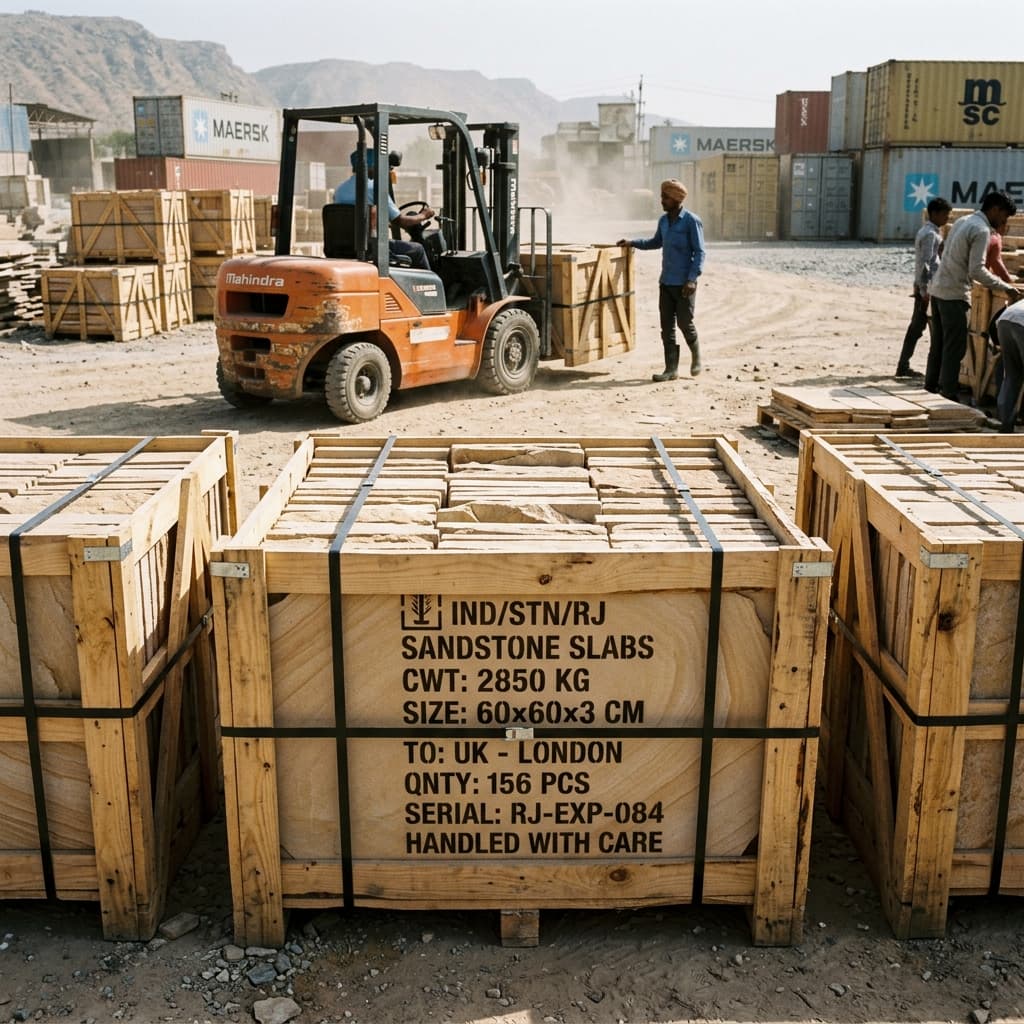
- Crates are lined with heavy-gauge waterproof polyethylene film, high-density polystyrene corner bumpers, and tightened with high-tensile galvanized steel straps.
- Full Container Loads (20ft FCL) are braced with timber dunnage and heavy-duty inflatable airbags to absorb dynamic sea motion and crane handling shocks.
Quarrying magnificent natural sandstone and profiling it with 0.1mm CNC precision is only half the battle. Delivering delicate carved jali screens, monumental peacock sculptures, and thousands of square meters of calibrated stone tiles to construction sites in London, Dubai, Berlin, or Toronto requires military-grade packaging engineering. At Garg Corporation Ltd., our 70-year export track record is built upon uncompromising logistics protocols.
1. The ISPM-15 Phytosanitary Standard Explained
All solid wood packaging material exported across international borders is subject to strict phytosanitary regulations under the International Plant Protection Convention (IPPC). Untreated timber can harbor wood-boring beetles and fungal pathogens that threaten global forestry ecosystems.
Every export crate constructed at our Dholpur and Sikandra dispatch hubs is built exclusively from certified kiln-dried pine wood heat-treated to a minimum core temperature of 56°C for at least 30 minutes. Each crate is indelibly branded with our government-registered ISPM-15 certification stamp, ensuring smooth clearance through international customs without fumigation delays.
2. The Anatomy of a Seaworthy Stone Export Crate
A standard freight pallet cannot withstand the dynamic stresses of maritime ocean transport. Our dedicated export packaging team builds heavy-duty timber crates featuring:
- Heavy-Duty Pine Stringers & Runners: 75x75mm solid timber bottom runners that provide safe four-way entry for heavy 3-tonne rough-terrain forklifts.
- Waterproof Polyethylene Enclosure: The interior of each crate is lined with 150-micron waterproof plastic sheeting to prevent saltwater humidity and maritime condensation from causing surface efflorescence.
- Polystyrene Foam Interleaving: High-density 10mm expanded polystyrene foam sheets are placed between polished or honed stone faces to prevent vibrational scuffing during transit.
- High-Tensile Galvanized Steel Strapping: Crates are cross-braced with heavy galvanized steel tension bands secured with crimped steel seals.
3. Vertical Edge Packing: The Physics of Breakage Prevention
One of the most critical rules of stone packaging is that tiles must NEVER be stacked flat horizontally on top of each other. Flat stacking concentrates the collective static weight of the stack onto the center of the bottom tiles, leading to flexural bending stress and catastrophic midpoint cracking during rough container shunting.
At our export yards, tiles are always loaded standing vertically on edge. This vertical orientation transfers the dead load directly downward through the compressive strength of the stone edges into the heavy timber base runners, rendering the crate virtually impervious to dynamic transport shock.
Physics of Packaging
Stone has exceptional compressive strength (>68 MPa) but limited flexural tensile strength. Packing tiles on edge utilizes compressive geometry to eliminate bending fractures.
4. 20ft FCL Stowing, Airbag Dunnage & Weight Distribution
Once packed, crates are loaded into 20ft heavy-duty shipping containers. Because ocean container ships experience severe rolling, pitching, and heave motion in high seas, crates must be firmly immobilized.
Our certified container packing specialists secure each container load with heavy timber cross-bracing and industrial vinyl inflatable dunnage airbags. When inflated between crates, these airbags exert continuous cushioning pressure, absorbing kinetic energy and eliminating any container cargo shift.
5. Inland ICD Transport & Global Customs Clearance
Consignments are cleared through Inland Container Depots (ICD Kanakpura / Jaipur) and transported via dedicated rail corridors to gateway deep-water seaports (Mundra and Nhava Sheva). We provide complete shipping documentation suites including Bill of Lading, Certificate of Origin, IS 3622 Test Certificates, and commercial packing lists.
From the bedrock of Dholpur to the architectural job sites of the world, Garg Corporation Ltd. ensures that every piece of natural sandstone arrives in flawless pristine condition. Contact our export desk to discuss FOB or CIF containerized shipping rates for your international project.
Frequently Asked Questions
What is an ISPM-15 heat-treated stamp, and why is it mandatory for stone exports?
ISPM-15 (International Standards for Phytosanitary Measures No. 15) is an international treaty regulation governing raw wood packaging material. Every timber crate used by Garg Corporation Ltd. is heat-treated in certified kilns and carries the official IPPC wheat-ear stamp, certifying it is pest-free and preventing quarantine delays at European, American, or Middle Eastern ports of entry.
What is your typical export breakage rate on ocean container shipments?
Due to our heavy-duty timber crate construction, high-density foam interleaving, and inflatable container dunnage, our documented global export transit breakage rate has remained under 0.8% across thousands of containerized shipments over the past 25 years.
How much weight can be loaded into a standard 20ft export container?
Depending on road weight regulations in the destination country, a standard 20-foot heavy-duty container accommodates between 26 to 28.5 metric tonnes of packed stone crates (typically 18 to 22 crates containing approximately 750 to 950 square meters of 25mm calibrated tiles).