Key Takeaways
- Agra Red (also known as Dholpur Red) derives its unmistakable terracotta crimson color from ferric iron oxide (hematite) grains evenly distributed within fine quartz strata.
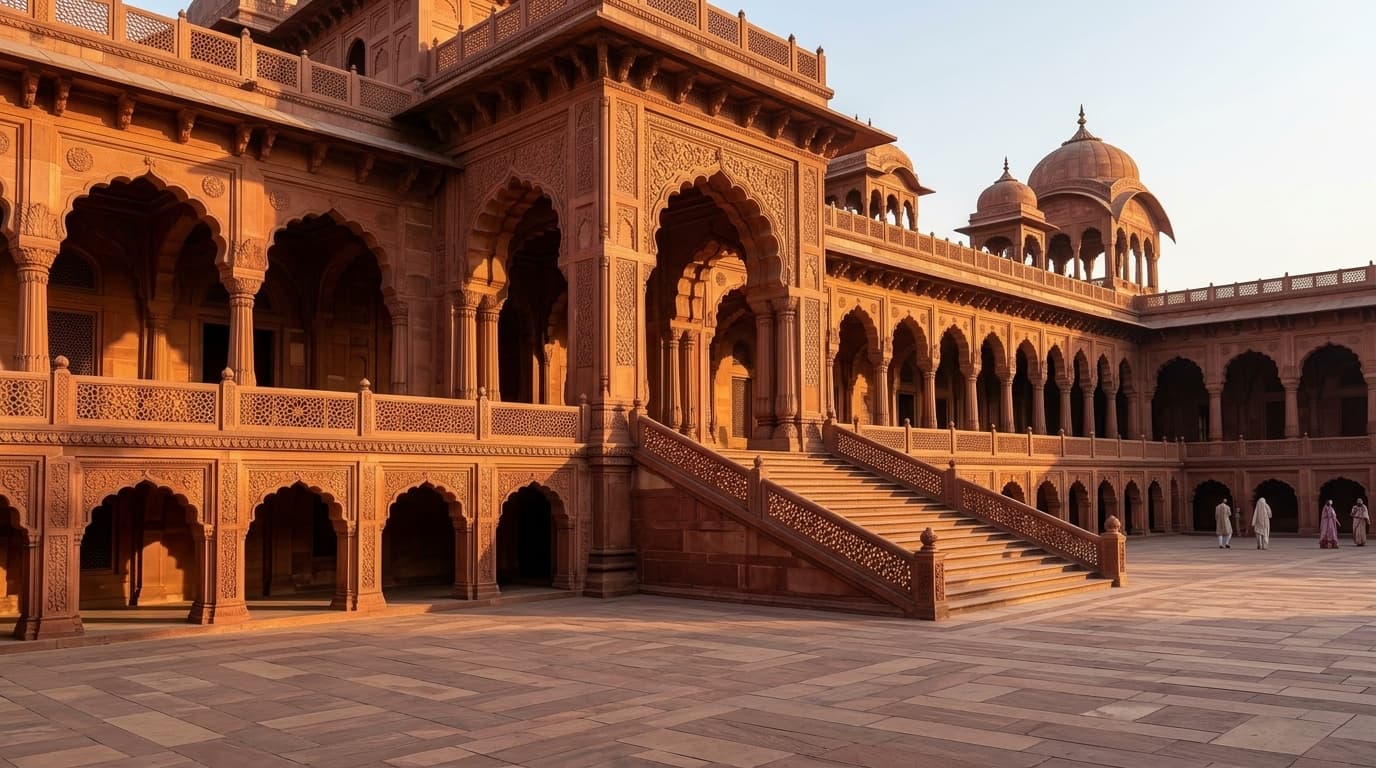
- The stone served as the primary monumental medium for UNESCO World Heritage Sites including Agra Fort, Fatehpur Sikri, Delhi Red Fort, and Lutyens' Parliament House.
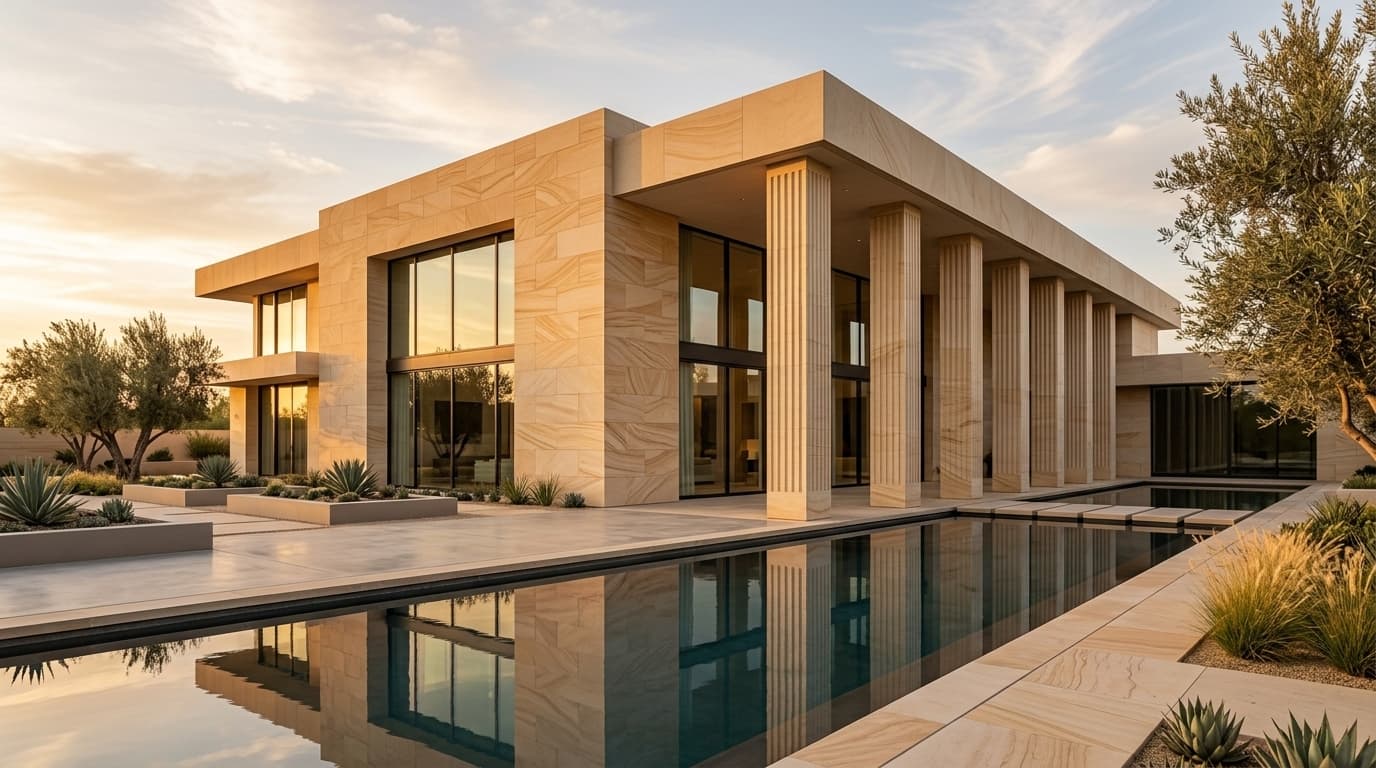
- Modern luxury architects use Agra Red to create striking visual contrast against white marble, manicured green landscapes, and modern floor-to-ceiling glass.
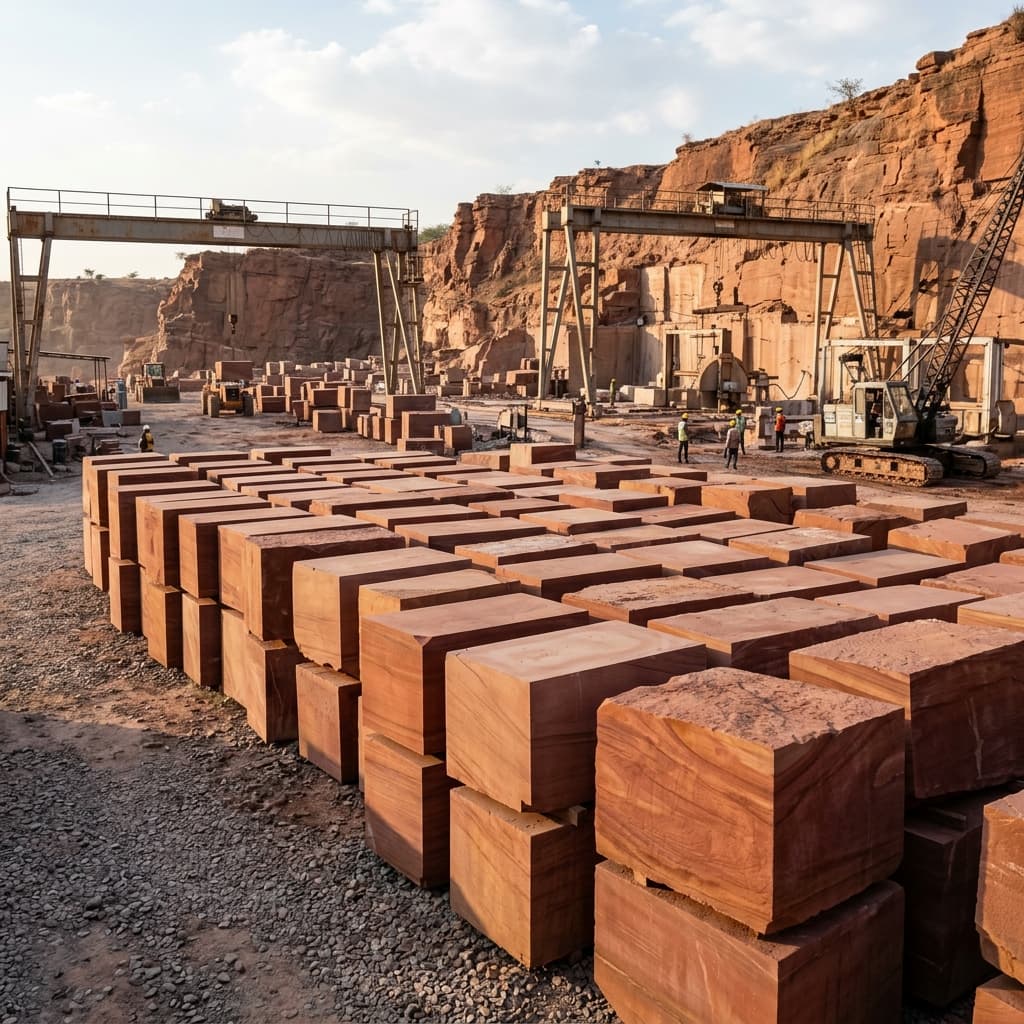
- Direct quarry sourcing ensures uniform batch color matching and block density across large-scale architectural consignments.
Few building materials on Earth carry the commanding presence and cultural resonance of Agra Red sandstone. From the majestic ramparts of Delhi's Red Fort to the classical colonnades of Lutyens' New Delhi and modern five-star palace resorts, this regal crimson stone has defined Indian monumental architecture for over a millennium. Today, a new generation of architects is rediscovering Agra Red—not merely for historical restorations, but as a bold, earthy, and deeply luxurious medium for modern residences.
1. The Geological Lineage of Red Sandstone
Extracted primarily from the Dholpur and Bari quarry zones in Rajasthan, Agra Red sandstone is an arenaceous sedimentary stone composed of ultra-fine quartz grains bonded by a dense siliceous cement. Its characteristic deep terracotta-to-crimson coloration is the result of micro-crystalline hematite (Fe2O3) naturally coated over each quartz particle during sedimentary deposition in prehistoric shallow sea beds.
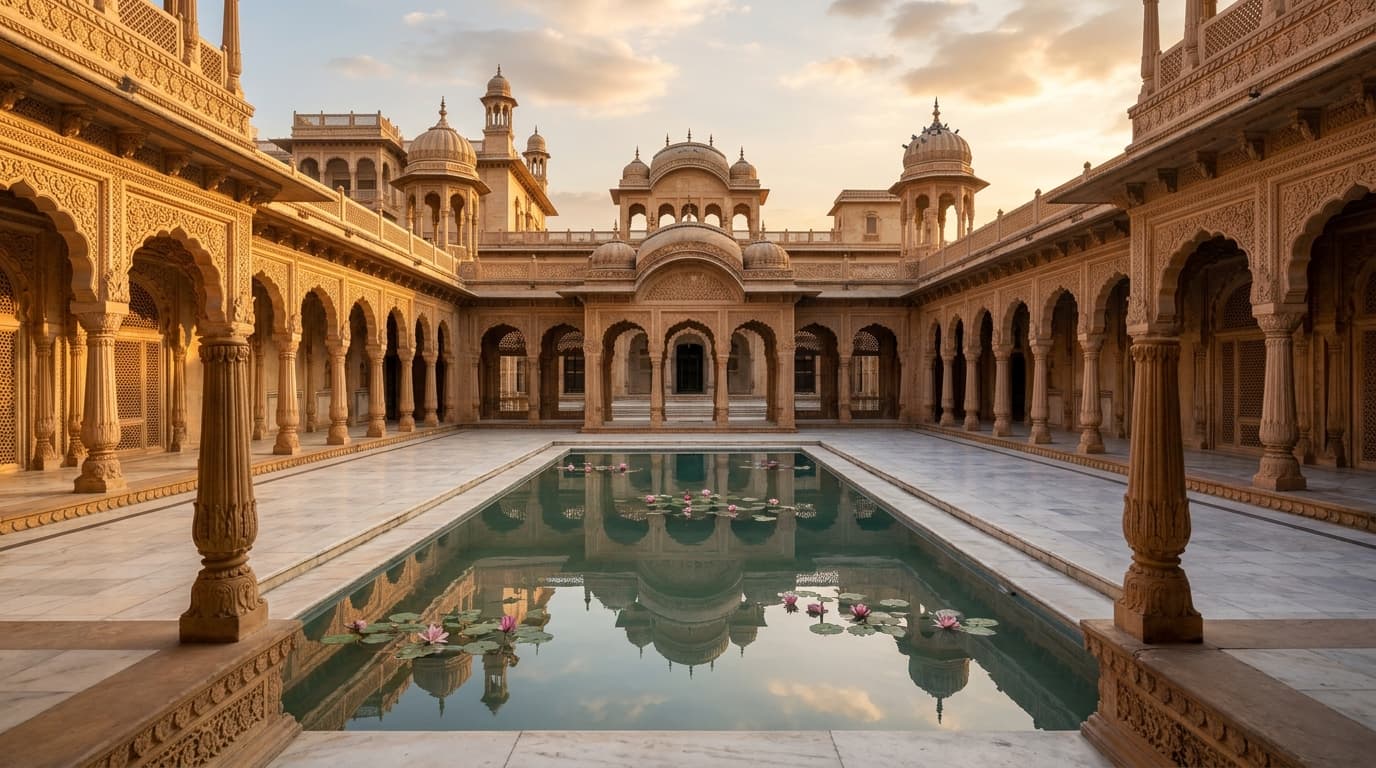
This natural ferric mineralization gives the stone its warm, light-refracting quality: in early dawn light, the stone glows with soft amber warmth; by noon, it radiates deep rust terracotta; and at dusk, it settles into an opulent imperial crimson.
2. Historic Precedents: The Stone That Built Empires
The monumental durability of Agra Red sandstone is proven not by laboratory simulations, but by centuries of standing exposure to monsoons, scorching northern Indian summers, and seismic activity:
- Fatehpur Sikri (1571 CE): Emperor Akbar's imperial city constructed entirely of local red sandstone, showcasing intricate pierced jali screens and cantilevered chhatris that remain pristine after 450+ years.
- Agra Fort & Red Fort, Delhi: Gigantic defensive bastions and royal audience halls demonstrating the stone's compressive strength under massive dead loads.
- Rashtrapati Bhavan & Parliament House: Sir Edwin Lutyens and Herbert Baker selected the iconic duo of Dholpur Red and Dholpur Cream sandstone to symbolize sovereign architectural permanence.
3. Agra Red in Contemporary Villa & Resort Design
In modern high-end architectural practice, Agra Red is no longer restricted to traditional Indian motifs. Renowned designers are utilizing its rich earthy texture to create arresting minimalist statement walls, cantilevered entryway portals, and exterior landscape terraces.
When juxtaposed with dark bronze window joinery, clear structural glass, and lush tropical greenery, Agra Red provides a grounded, organic warmth that synthetic tiles and grey concrete cannot replicate.
Design Philosophy
Agra Red sandstone creates an indelible sense of place. When used for grand entrance gates or courtyard feature walls, it immediately announces luxury, longevity, and rooted heritage.
4. Surface Finishes: Honed, Shotblasted & Rock-Faced
The versatility of Agra Red stone lies in the diverse spectrum of textures that can be achieved through artisanal and machine processing at our Dholpur workshops:
- Honed Finish: Silky-smooth matte surface with zero gloss; highlights the subtle grain striations, ideal for interior wall paneling and covered verandas.
- Shotblasted / Sandblasted Finish: Mechanically textured with fine steel grit to produce a slip-resistant micro-pitted surface, perfect for exterior walkways and pool copings.
- Rock-Faced / Chiseled Finish: Hand-dressed by masons with a pitching chisel to create rugged, three-dimensional relief for boundary walls and podium plinths.
- CNC 3D Fluted: Precision-milled geometric grooves and fluting creating dynamic shadow lines on contemporary luxury facades.
5. Sourcing Guide: How to Select Premium Unblemished Red Blocks
Because sandstone is a natural formation, quarry bench selection is paramount. Inferior grades may exhibit soft clay veins ('dhaag') or uneven calciferous pockets that degrade when exposed to continuous moisture.
At Garg Corporation Ltd., our 70-year mining heritage allows us to extract blocks exclusively from deep, virgin quarry strata where the sandstone demonstrates uniform density (2.48 g/cm³), zero shale interbedding, and deep, homogenous color saturation.
Whether crafting a luxury modern farmhouse, an authentic heritage resort, or a monumental public building, Agra Red sandstone delivers an unmatched pedigree of strength and beauty. Reach out to our architectural advisory desk to discuss quarry-direct container consignments or custom fabrication requirements.
Frequently Asked Questions
Is there a difference between Agra Red and Dholpur Red sandstone?
Geologically, they originate from the same continuous Vindhyan sandstone formation extending across the Dholpur-Bari-Rupbas belt near Agra. 'Agra Red' is the historical trade name popularized during the Mughal era due to Agra's royal stone markets, whereas the primary extraction quarries have historically been situated in the Dholpur district of Rajasthan.
Can Agra Red sandstone be used in swimming pool surroundings?
Yes. When treated with a natural cleft or shotblasted finish, Agra Red provides excellent wet slip resistance (R11). Furthermore, its ferric quartz matrix is highly resistant to pool chlorine and ambient salts, making it a favorite for Mediterranean and royal courtyard pool surrounds.
Does Agra Red require chemical sealers?
High-grade calibrated Agra Red sandstone with water absorption under 1.2% does not strictly require chemical sealers. However, applying a breathable, penetrating silane-siloxane impregnator is recommended in high-traffic outdoor barbecue or dining zones to repel organic oil stains while letting natural moisture vapor escape.