Key Takeaways
- Dholpur sandstone offers warm colour, natural grip and carving flexibility.
- Granite is extremely hard and durable but can be hot and slippery when polished.
- Kota stone is economical and widely used for large areas, with a plainer look.
- Texture matters more than the stone: choose non-polished finishes outdoors.
Outdoor floors face sun, rain, dust and footfall. Here is how three popular Indian stones compare.
Side-by-side comparison
General characteristics; actual performance depends on variety and finish.
| Dholpur sandstone | Granite | Kota stone | |
|---|---|---|---|
| Look | Warm beige, red, pink, chocolate | Speckled, dark or light | Plain grey-green |
| Grip | Good when textured | Slippery if polished | Good |
| Heat | Comfortable in light colours | Can get hot (dark) | Moderate |
| Carving / profiling | Easy | Difficult | Limited |
| Cost | Mid | Mid to high | Lower |
Why many choose sandstone
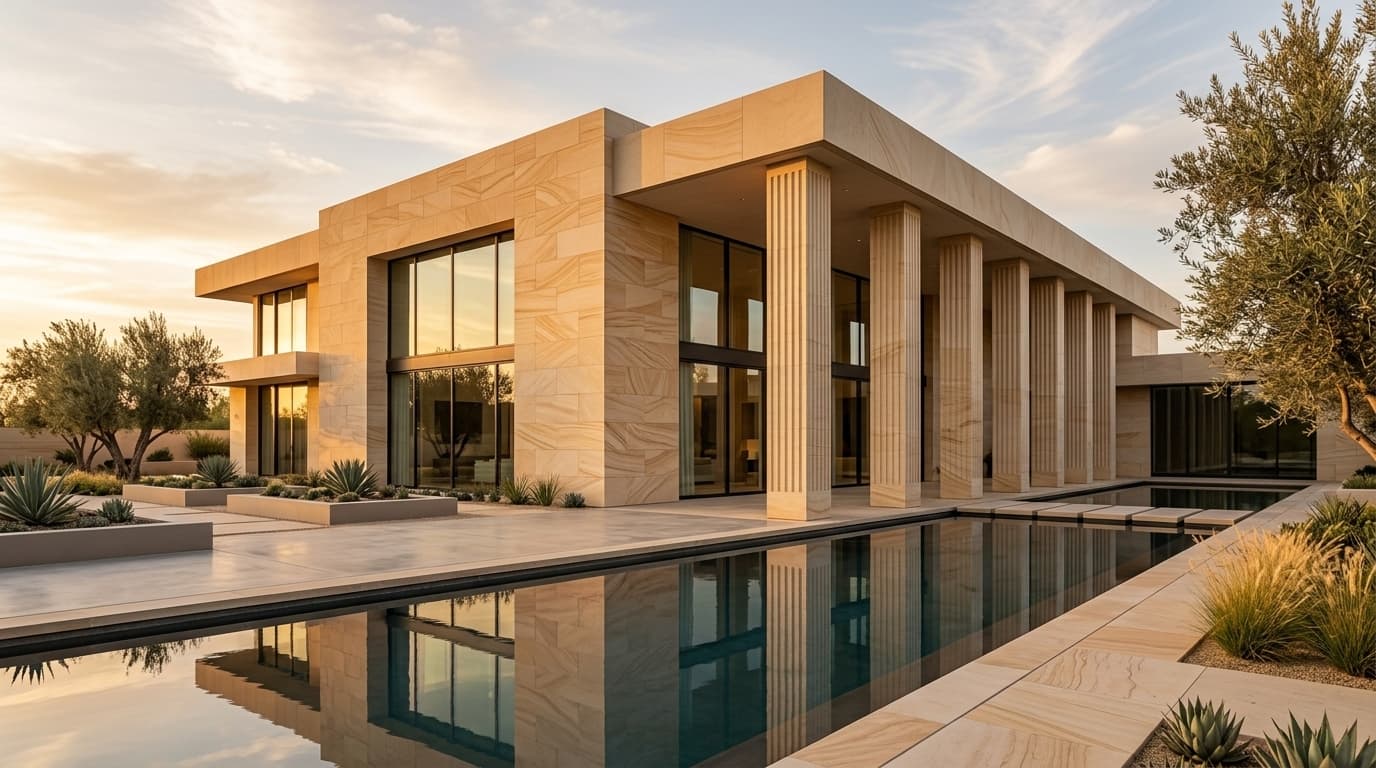
Dholpur sandstone is compact, easy to dress and available in warm colours that suit gardens and elevations. It can also be profiled into steps, coping and edges from the same material, so everything matches.
Choose a safe finish
Whatever the stone, avoid polish outdoors. Flamed, riven, brushed or split finishes grip well and hide wear.
For warmth, grip and flexibility outdoors, Dholpur sandstone is hard to beat. Request a free quote to compare finishes and pricing for your area.
Frequently Asked Questions
Which is best for a driveway?
Thick sandstone or granite in a textured finish suits driveways. Sandstone gives a warmer look; granite is harder and costlier to shape.
Which is coolest underfoot?
Light-coloured, textured stones such as beige sandstone generally stay more comfortable than dark polished granite in strong sun.
Which is cheapest?
Kota stone is usually the most economical, but price depends on thickness, finish and quantity — request a quote for your case.