Key Takeaways
- Marble is the premium choice for indoor living areas; sandstone is the better choice outdoors and in high-traffic areas.
- Kota stone is a budget-friendly limestone, popular for large floors and utility areas.
- Slip resistance, heat behaviour and maintenance matter as much as looks.
- Many homes combine stones — marble inside, sandstone on the porch, patio and driveway.
Choosing a floor stone is mostly about where it will be laid. Here is how sandstone, marble and Kota stone compare in the situations homeowners actually face.
Quick comparison
The table below summarises the typical differences. Exact performance varies by variety and finish.
| Sandstone | Marble | Kota stone | |
|---|---|---|---|
| Look | Earthy, warm, textured | Polished, veined, luxurious | Plain, grey-green |
| Best location | Outdoors, porches, living areas | Indoor living rooms, lobbies | Large floors, utility areas |
| Slip resistance | Good, especially textured finishes | Lower when polished and wet | Good |
| Maintenance | Low; seal for stain protection | Higher; polish and stain care | Low |
| Typical cost | Mid | Mid to high (by variety) | Lower |
When sandstone is the right choice
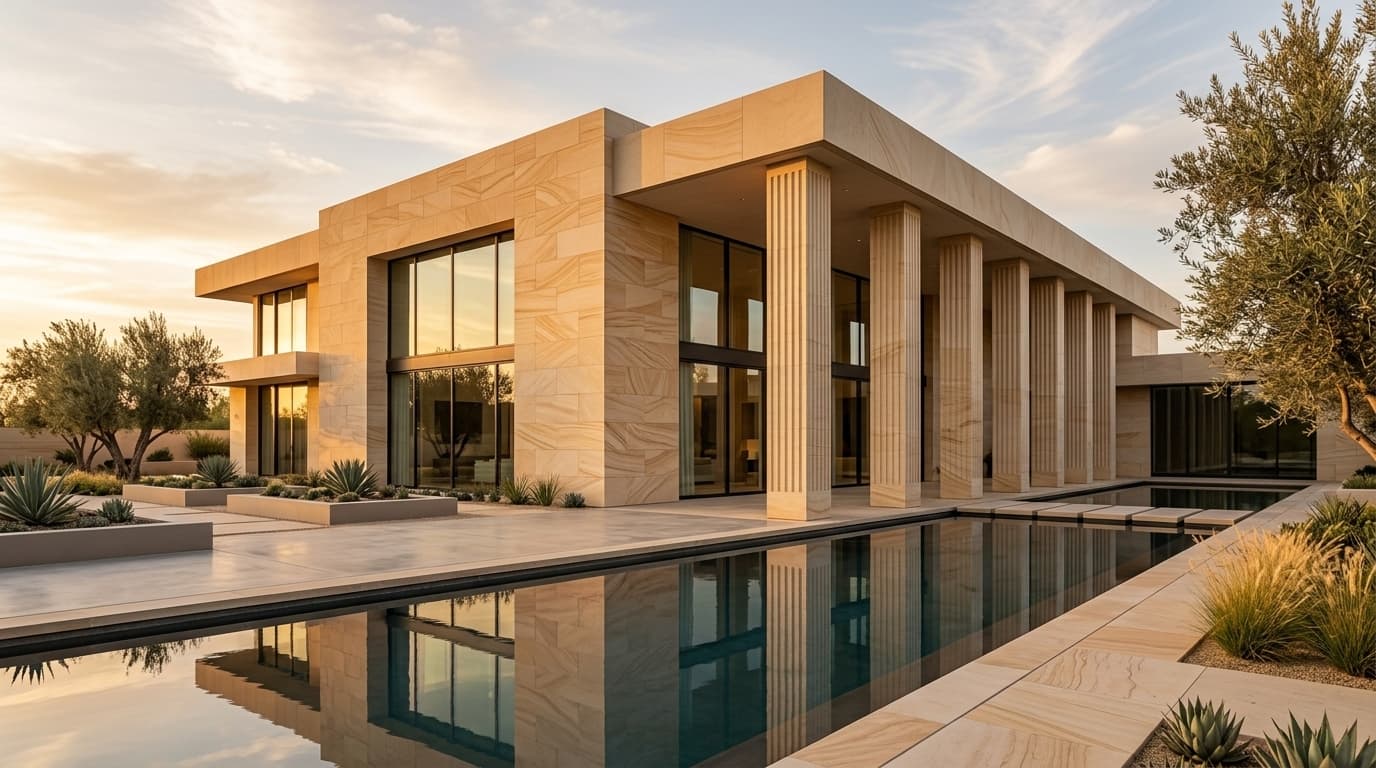
Sandstone is dense and weathers gracefully, which is why it is used on driveways, patios, steps and pool decks. Its colours — beige, red, pink, chocolate — hide dust and everyday marks, and a textured finish keeps it safe when wet.
When marble is worth it
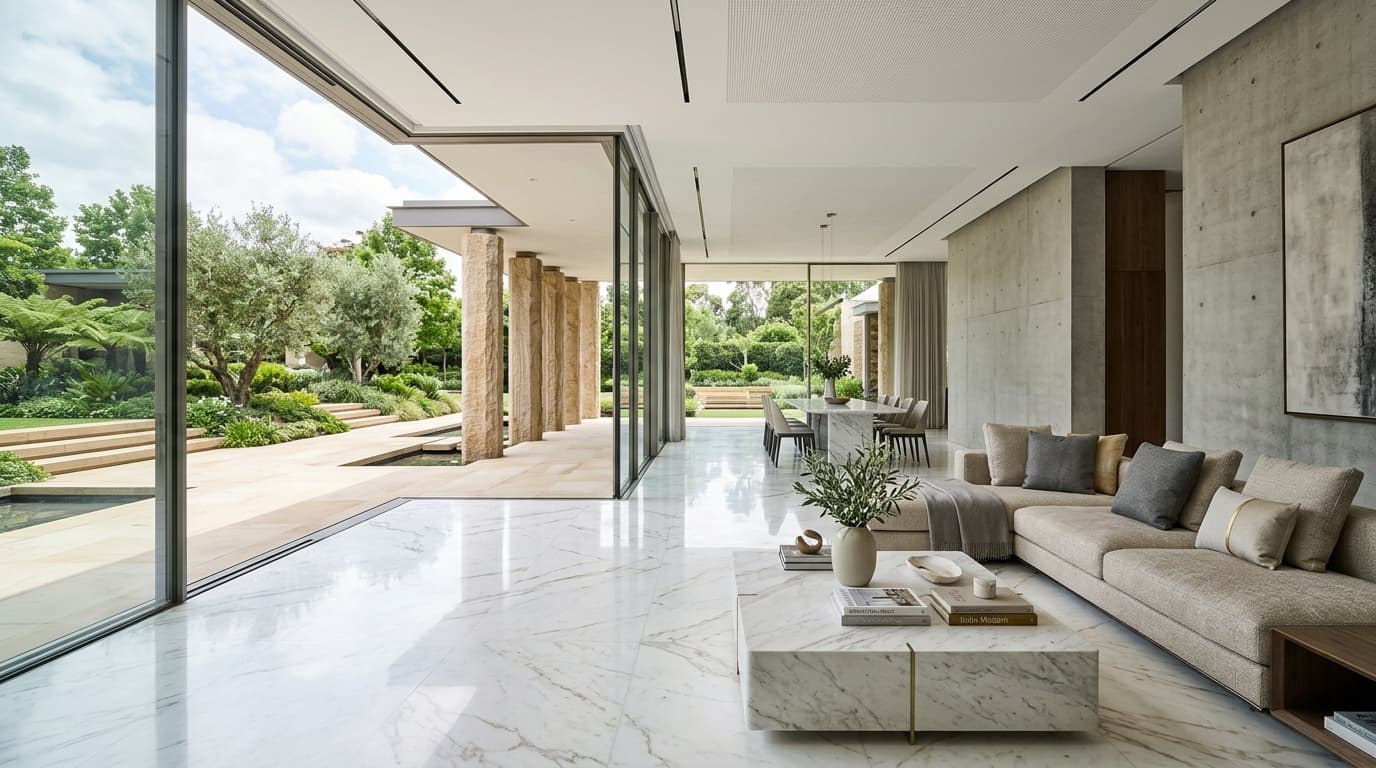
Marble gives an unmatched sense of luxury in living rooms, entrances and bathrooms. Indian marble standards (IS 1130) set water absorption limits, and good installation with sealing keeps it looking new. It does need more care: avoid acidic cleaners and wipe spills quickly.
Where Kota stone fits
Kota stone is a fine-grained limestone from Rajasthan, valued for covering large floor areas economically. It suits garages, kitchens, schools and commercial spaces where durability and price matter more than an ornate look.
Mixing stones in one home
Many of our clients use marble in the main lounge and master bedroom, sandstone on the veranda, steps and driveway, and a plainer stone in service areas. A consistent colour family keeps the transition between them natural.
Match the stone to the space: sandstone outdoors and for rustic warmth, marble indoors for polish, Kota for budget coverage. Dholpurstones.com supplies sandstone and marble — send your floor plan or requirement for a free quote.
Frequently Asked Questions
Which is better for outdoor flooring, sandstone or marble?
Sandstone. Its natural texture gives better grip when wet and it tolerates sun, rain and temperature swings. Polished marble can become slippery and is better kept indoors.
Does sandstone stay cooler than marble?
Light-coloured, textured sandstone generally feels comfortable underfoot in sun because of its surface texture and thermal behaviour, which is why it is widely used around pools and terraces.
Can I use sandstone inside the house?
Yes. Honed sandstone suits verandas, courtyards, living areas and bedrooms where a warm, earthy look is wanted. Sealing is recommended in kitchens and bathrooms.