Key Takeaways
- Dholpur siliceous sandstone is chemically inert to both traditional chlorine and modern saltwater electrolysis pools, avoiding salt-crystallization spalling that destroys porous limestones.
- Shot-blasted and brush-antiqued sandstone finishes achieve a wet Pendulum Test Value (PTV) of >52, guaranteeing absolute non-slip safety for wet bare feet.
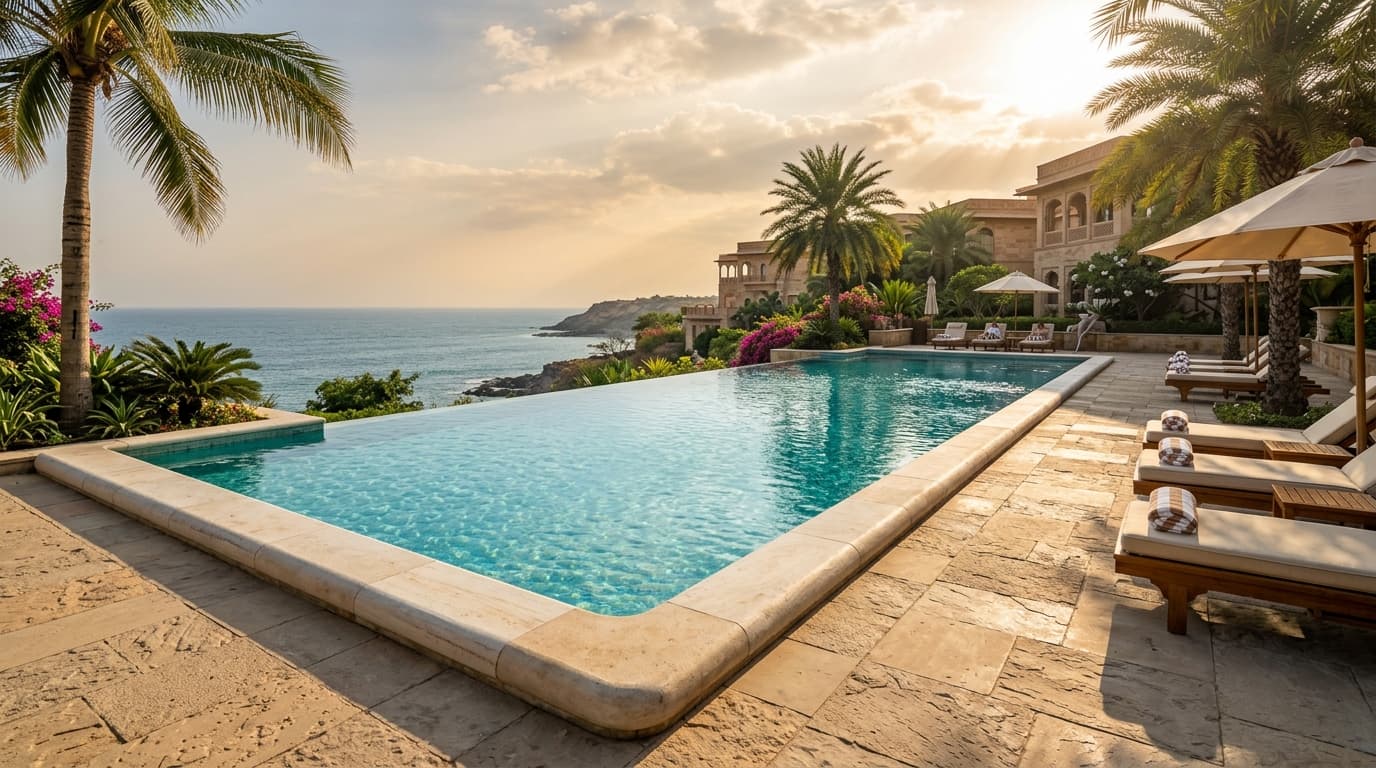
- Custom CNC-profiled pool copings—including Full Bullnose, Drop-Face Rebated (L-shape apron), and Modern Pencil Round—offer superior swimmer handgrip and eliminate sharp masonry joints.
- Ultra-low water absorption (<1.15%) minimizes subsurface saturation, preventing fungal black algae colonization and winter waterline spalling.
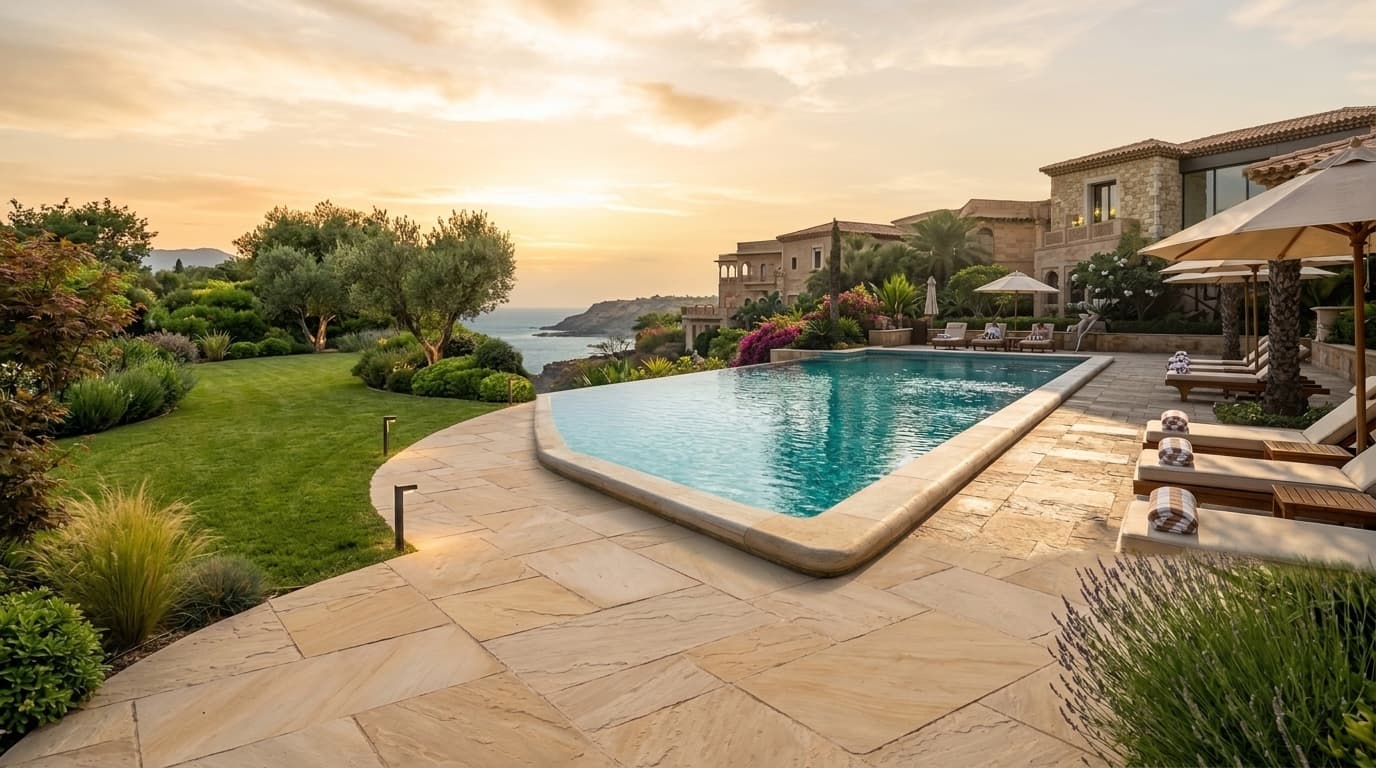
In luxury resort and private estate architecture, the swimming pool coping is both a crucial functional safety element and the visual crown of the pool. It protects the pool shell from hydraulic back-pressure, provides a comfortable grip for swimmers, and defines the edge of the water. In this technical dossier, we explore why siliceous natural sandstone is the premier material choice for salt-water swimming pools and wet decks.
1. Coping Profiles: Full Bullnose vs Drop-Face Rebate vs Pencil Round
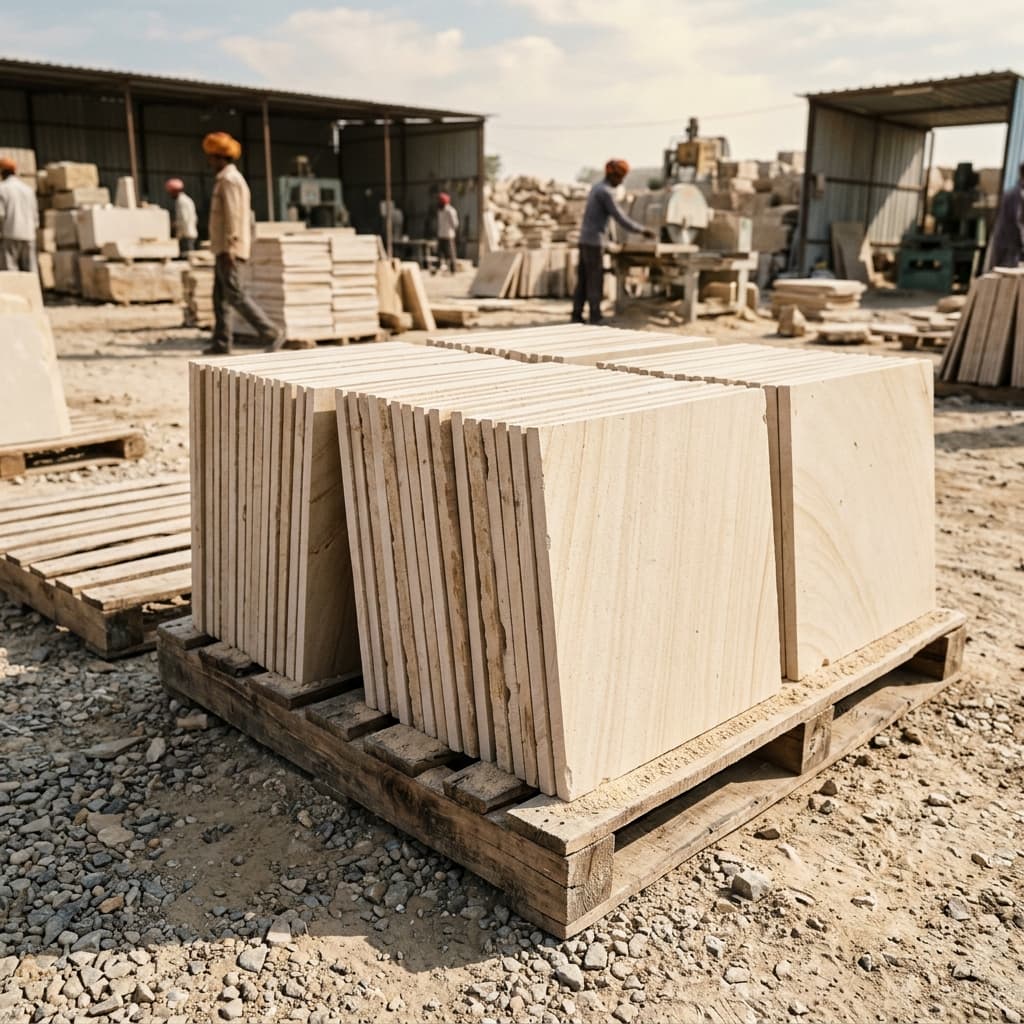
The geometry of the coping edge dictates the architectural style and tactile experience of the pool. Garg Corporation Ltd. crafts bespoke pool coping units on computerized 5-axis bridge saws and CNC edge polishers:
- Full Bullnose: A full 180-degree radius edge profile. Extremely comfortable for children and swimmers grasping the pool perimeter, with zero sharp edges.
- Drop-Face (Rebated / L-Shape): Monolithically carved or epoxied 40-100mm front apron that extends downward into the pool, disguising the waterline grout joint and creating a bold architectural slab look.
- Modern Pencil Round: A clean 5mm radius top and bottom edge that complements contemporary rectilinear pools and minimalist villa architecture.
- Radial Curved Units: Custom radius-cut curved coping sections designed to match freeform lagoon pools and circular hot tub copings with zero chord segmentation.
2. Wet Slip Resistance: PTV & BS 7976-2 International Safety Standards
Wet pool surrounds present significant slip-and-fall hazards. Standard glazed porcelain tiles or polished stones become dangerously slick when wet.
Under British Standard BS 7976-2 (Pendulum Test Value for slip resistance), a surface must achieve a minimum wet PTV of 36 to be classified as low slip potential. Our shot-blasted and fine-honed Dholpur sandstone copings regularly achieve wet PTV ratings between 52 and 58, providing supreme tactile traction under wet bare feet even when submerged in pool splash zones.
Safety Standard Certification
Dholpur sandstone pool copings with textured finishes achieve British Standard BS 7976-2 wet PTV > 52, far surpassing international resort safety mandates.
3. Chemical Durability: Saltwater Chlorination vs Calcium Dissolution
Modern luxury pools increasingly utilize saltwater chlorination systems (generating chlorine through sodium chloride electrolysis). When saltwater splashes onto porous calcareous stones (such as travertine, limestone, or cheap marble), the water evaporates, leaving salt crystals trapped within micro-pores. As these crystals grow, they exert massive crystallostatic pressure, causing surface pitting and catastrophic crumbling.
Because Dholpur Beige is a quartz-based siliceous sedimentary stone cemented by silica, it exhibits virtually zero chemical reactivity with chlorides, sulfates, or pool water balancing chemicals. It remains pristine and smooth for decades.
| Material Type | Saltwater Resistance | Wet Slip Safety (PTV) | Thermal Comfort (Summer Sun) | Edge Profile Workability |
|---|---|---|---|---|
| Dholpur Siliceous Sandstone | Exceptional (Zero pitting) | PTV > 52 (Very Low Slip) | Comfortably cool (SRI ~80) | Superior (Precision CNC Bullnose) |
| Porous Travertine | Poor (Severe salt spalling) | PTV 38–42 (Moderate) | Comfortable | Moderate (Prone to void breakout) |
| Honed Quartzite | High | PTV 40–46 (Moderate) | Hot in direct sun | Difficult (Extremely hard & brittle) |
| Ceramic / Porcelain Tiles | Impervious to salt | PTV varies (Slick if glazed) | Extremely hot (Burns feet) | Requires fragile glued miters |
4. Splash-Zone Waterproofing: Flexible Polymer Membranes
Water that splashes over the coping edge must not penetrate behind pool tiles or into adjacent substrate beds. Prior to laying coping stones, the concrete pool bond beam must be treated with a two-part polymer-modified elastomeric waterproofing slurry.
Coping slabs should be bonded using C2TE S2 classified high-flexibility tile adhesives that accommodate continuous microscopic thermal movement and vibrations from pool pumps and swimmers jumping off the edge.
5. Coping Joint Detailing: Polyurethane Elastic Expansion Joints
A catastrophic error in pool design is grouting the joint between the coping stone and the adjacent deck with rigid cement mortar. As the pool shell and patio slabs expand at different rates under solar heating, rigid mortar crushes, causing coping stones to pop off or crack.
We mandate a continuous 10mm expansion joint between the rear of the pool coping and the adjacent patio deck, filled with closed-cell polyethylene foam backing rod and sealed with UV-resistant neutral-cure polyurethane mastic.
For resort infinity pools, private villa plunge pools, and Olympic-sized estate facilities, natural Dholpur sandstone pool coping delivers unyielding chemical resistance, certified slip safety, and sculptural bullnose elegance. Consult with Garg Corporation Ltd. for custom coping CAD drawings and factory profiling.
Frequently Asked Questions
Does saltwater from modern saline swimming pools damage natural sandstone coping?
Calcareous stones like soft travertine or limestone dissolve and develop severe pitting when exposed to saltwater electrolysis due to sub-surface halite crystallization. However, authentic Dholpur Beige sandstone is siliceous (composed of over 92% quartz bound by pure silica), making it completely inert to salt water, chlorine, and pool balancing acids.
What is the difference between Full Bullnose and Drop-Face (Rebated) pool coping?
Full Bullnose coping features a continuous semi-circular rounded front edge (typically 30mm or 40mm thick) that provides an ultra-smooth, ergonomic handhold for swimmers climbing out of the pool. Drop-Face (or Rebated / L-shaped) coping has a solid vertical downturned front apron (typically 50mm to 100mm drop) that conceals the pool waterline tile and skimmer beam, creating a dramatic monolithic aesthetic favored in luxury minimalist and infinity pools.
How do you prevent pool coping tiles from loosening over time?
Coping loosening is caused by structural pool vibration and thermal expansion mismatch. We specify C2TE S2 high-flexibility polymer-modified cementitious adhesives applied with 100% trowel coverage, coupled with a continuous 10mm elastic polyurethane expansion joint between the pool coping beam and the surrounding deck.